Showing posts with label Disability. Show all posts

Is there a doctor in the house?


First things first, before having someone drive a prototype, it is important to know about his/her condition. Of course, the doctor is the main source of information, but in order to process results afterwards, some index is always useful, we are engineers, after all!!. The key is to obtain a quantified disability profile to correlate this data with the amount of help they may require, demand or receive.

Disability is technically defined as a lack of ability relative to a personal or group standard or norm, but, in fact, there is often simply a spectrum of ability. It may involve physical, sensory, cognitive or intellectual impairment, mental disorder and/or various types of chronic disease.

In experimental work, though, it is better to define disability as the degree of difficulty to independently perform basic Activities of Daily Living (ADL) [Katz]. Disability is not an attribute that is clearly present or absent, but rather a matter of degree.

One of the best ways to obtain global information about patient needs is represented by the multi-dimensional approach and, in particular, in case of elderly patients the most common approach is the CGA, a multidimensional process designed to assess an elderly person's functional ability, physical health, cognitive and mental health, and socio-environmental situation. It includes different disability scales to evaluate the cognitive and physical state and condition of individuals. Here are the most popular ones.

The MMSE or Folstein test [Crum] is a brief 30-point questionnaire test that provides a quantitative measure of cognitive status in adults. Any score
over 27 (out 30) is effectively normal, event though it changes depending on age and education. In the time span of about 10 minutes, it samples various functions, including arithmetic, memory and orientation.

IADL, also called Lawton's scale [Lawton], is based on a questionnaire to evaluate the capacity of the subject to perform daily tasks ruled by cognitive functions (judgement, language, orientation, calculation, memory, planning). Thus, IADL measures the degree of autonomy of an elderly individual. This test appears complementary to MMSE, that rather evaluates cognitive functions. For example, a subject with memory disorders or difficulty of calculating shows a reduced score. 4 tests are particularly important since they are well correlated with cognitive functions evaluated by the MMSE test. They include the ability to : i) Use telephone; ii) Use transportation; iii) Take medication; and iv) Handle finances. For example, using a telephone under his own initiative is related to the intention and planning of a task (to look up the name of somebody in a phone book) and to the comprehension of language (to have a conversation). On the other hand, to be limited to a small number of well known phone numbers or to answer the telephone without calling implies automatic mechanisms. An evaluation of these 4 activities allows early detection of cognitive deterioration, several years (approximately 3 to 5) before a dementia is diagnosed. Detection of an alteration of at least one of these 4 activities calls for a more precise neurological assessment.

The GDS [Yesavage] is a self-report inventory, constructed to assess depression and general well-being in the elderly. It is a brief questionnaire in which
participants are asked to respond yes/no to 30 questions in reference to how they felt on the day of administration. Scores of 0-9 are considered normal, 10-19
indicate mild depression and 20 - 30 indicate severe depression.

The Barthel Index [Mahoney] consists of 10 items that measure a person's daily functioning, specifically ADL and mobility. Items can be divided into a
group that is related to self-care (feeding, grooming, bathing, dressing, bowel and bladder care, and toilet use) and a group related to mobility (ambulation, transfers, and stair climbing). The maximum score is 100 if 5-point increments are used,
indicating that the patient is fully independent in physical functioning. The lowest score is 0, representing a totally dependent bedridden state.
Apraxia is a neurological disorder characterized by loss of the ability to execute or carry out learned purposeful movements, despite having the desire to and the physical ability to perform the movements. It scores from 0 (worse result) to 10.

Bigger, faster, better, more!

I know, I know. It's a Russian thing.
When we're about to do something stupid,
we like to catalog the full extent
of our stupidity for future reference.
- S. Ivanova, A Voice in the Wilderness


And just when everything seems to be going so well, someone always asks, "so, what is so special about your work?". For scientists, a simple "it works" does not seem enough, so everyone stomps into the field of metrics sooner or later. Inventing some metrics of your own, while obviously appealing, will just not do. Since words might do you no good either, this is the point where standards come handy. The key idea here is that we are good as long as our system behaves better than previous, similar ones in at least a few in quantifiable aspects.


When one starts to look for standard standards in the wheelchair navigation field, bad news come first: there seems to be no established one to measure wheelchair performance -specially regarding power wheelchair navigation and, more specifically, shared control-. Fortunately, there is a large number of proposals that more or less agree regarding parameters of interest in assisted navigation (e.g. [webster et al, 88]).

Assisted wheelchair navigation is a field where many fields converge, from cognitive sciences to medicine, and all the way through engineering. Consequently, trying to fit all related metrics in the same bin would be like trying to explain feelings with differential equations. Instead of doing so, we will go for a tentative distinction between different categories, which might be more or less correlated, but are simpler to explain separately. Keep in this channel for the categories very soon in a web near you :)

Think fast!!

In extreme, technology has recently made it possible to actually control systems with the brain. This field, widely known as BCI, is extensive, but has offered irregular results. However, there have been successful experiments in the wheelchair field lately, most related to EEG, with some work on magneto-encephalography, near-infrared spectroscopy, and functional magnetic resonance imaging as well. EEG is a favorite because it is non-invasive and fairly comfortable to use. The main problem of EEG, though, is that it provides a large amount of data with a very poor signal to noise ratio, meaning that it is actually as difficult to extract patterns from captured signals as to find the proverbial needle in a haystack. Consequently, rather than looking for very precise commands, researchers mostly quantify a reduced number of bins -sometimes labeled as mental states- to choose among a limited number of options. A typical example is trying to move a square in a screen in any of the four dominant sides -right, left, up or down-. These commands could be translated into motion directives to the wheelchair.


However, in order to fit clearly in one of these bins, the user must keep a state of continuous awareness to adequately maneuver the wheelchair. Think, for example, about juggling with several balls while following a lively conversation at the same time. Obviously, fine control here is analogous to voice-based fine control, only harder, something that could lead to excessive mental load and exhaustion. Assuming that a person can not be concentrated 24/7, some researchers found a different technique that might do the trick: rather than clustering existing signals, it is also possible to provoke a strong one and detect it. The chosen one is usually the P300 evoked potential. This natural, involuntary response of the brain to infrequent stimuli is coherent to an oddball paradigm, where a random sequence of stimuli is presented, only one of which interests the subject. Around 300ms after the target flashes, there is a positive potential peak in the EEG signal, which can be reliably detected and related to the interesting stimulus. The P300-based BCI requires almost no user training and only a few minutes to calibrate the detection algorithm param and has been successfully used to control a wheelchair.

Here I want to outline the work of the young, spanish BitBrain company, not just because they are friends, but also because they are really good at what they do.


BTW, we've gone multiligual today, but videos are pretty self-explanatory (I hope)

X-treme Interfacing!!

Wheelchair users that can not move at all are not able to use conventional HCI. Voice interfaces have been used in these situations (e.g. [Simpson,98]), so that users may actually tell the robot where they want to go. These devices, like joysticks, are commercially available and, after adjusted to a given user, fairly reliable, particularly after mobile phones have included voice recognition in their operating systems (1) Technically, they are not so different from touch screens from a qualitative point of view, as, after all, the system just receives a destination.

At some point, it was even believed that persons could simply control the chair via voice commands, in terms of left, right, slow down, stop, etc. Unfortunately, it has proven to be almost impossible to make frequent small adjustments to a wheelchair's velocity via voice [Simpson,02]. Furthermore, a failure to recognize a voice command could cause the user to be unable to travel safely and stress tends to do that, specially if users have some disability related speech difficulty. Instead, some systems decided to make adjustments on line to modify a wheelchair trajectory, previously chosen via conventional path planning instead [Rebsamen,07].

Some persons, though, have strong speech impairments and, consequently, can not use voice control as such. Voice in these cases can be complemented or replaced by other physical interfaces, controlled by head, feet, chin, shoulder switches, etc, which are fairly common, yet quite expensive in the field of assistive technologies. These interfaces are not as comfortable as the aforementioned ones but, in some cases, there may be no other choice for the user to exert some control on mobility. While it might be tempting to just intuitively choose one of these, given a particular case, it is extremely important to take into account ergonomics and medical factors. For example, some headtrackers might not be advisable for people with spinal cord injury, as they imply significant neck motion.

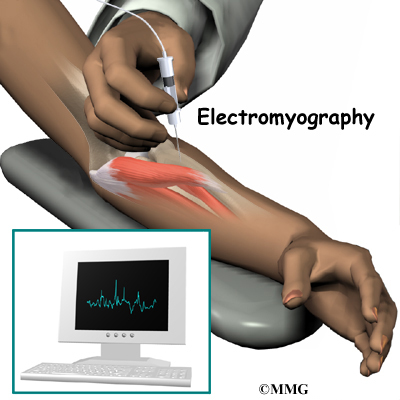
In more critical situations, even simpler, specifically designed interfaces can be used. After studying the needs of a patient stricked by ALS, the Telethesis project decided to use an on/off switch to choose an option in a screen that is continuously renovated. If mobility is completely out of question, more invasive interfaces are still an option. Eye tracking, for example, tries to estimate where the person is looking in order to move in that direction. Some eye tracking mechanisms are based on capturing video of the person's face to check for the position of the cornea, either with natural light or structured illumination [Li,07]. Other systems, like EagleEyes, rely on electrodes to measure the EOG, which corresponds to the angle of the eyes in the head [Yanko,98]. Electromiographic sensors use probes to capture muscular activity[Mulroy,04].


(1) Leading companies in the voice recognition field include Microsoft Corporation (Microsoft Voice Command), Nuance Communications (Nuance Voice Control), Vito Technology (VITO Voice2Go), Speereo Software (Speereo Voice Translator) or MyCaption for BlackBerry, to name just a few.

Power in numbers: Why Assistive robots become handy

Population today is progressively aging in developed countries. The increase in the proportion of older persons (60 years or older) is being accompanied by a decline in the proportion of the young (under age 15). Nowadays, the number of persons aged 60 years or older is estimated to be 629 million and expected to grow to almost 2 billion by 2050, when the population of older persons will be larger than the population of children (0-14 years) for the first time in human history [DPI]. Naturally, people living longer also implies an increasing number of people affected by chronic diseases, such as heart disease, cancer and mental disorders. Chronic diseases may frequently lead to disability. It is estimated that the costs of health care could rise from 1.3 trillion to over 4 trillion dollars for these reasons [Ciole&Trusko, 1999]. Costs are particularly high if persons are not independent due to a disability.

Disability is a difficult concept to define, unless in a broad sense. It could be accepted that a person has a physical or cognitive disability when they lose the capacity to do some things on their own, meaning that their independence is threatened and that they require assistance in every day tasks. More specifically, disability implies not being able to to carry out the so called basic Activities of Daily Living (ADL) such as bathing, eating, using the toilet and walking across a room, as well as shopping and meal preparation.

Under these circumstances, either home assistance has to be granted or the person needs to be institutionalized. In nursing facilities, though, costs are higher and the quality of life is often reduced [Barton,1997]. Lack of human resources to assist elder people leads naturally to
create systems to do it in an autonomous way (e.g. [Volosyak,2005]). Studies on the use of assistive devices in a general population in Swedish descriptive cross-sectional cohort studies [Ivanoff,2005] reported that one-fifth at the age of 70 and almost half the population at the age of 76 had assistive devices, usually in connection with bathing and mobility. Another study of 85-year-olds in a general elderly population found that 77% of them had one or more assistive devices, also more frequently for bathing and mobility. The same pattern has been found in other general population studies, although the prevalence rates vary from 23 to 75% according to studied population, age group and type of assistive devices.

To sum up, prevalence rates vary, but the use of assistive devices is very common among the elderly and their use increases with age. It is consequently of extreme importance to create a new generation of tools to assist people with disabilities, so that their independence and autonomy is improved. Specifically, it is stated by health professionals that mastering of mobility assistive device skills enhances a person's autonomy and participation in ADL [Cortes et al, 2004]. Training these skills is also an important part of the rehabilitation process. Furthermore, assessment of wheelchair skill performance can provide valuable information about daily functioning and participation and even be used to check the progress of degenerative processes or rehabilitation therapy.

Older Posts Home

Recent News

-Biometrically adapted wheelchair control paper accepted in IEEE Trans. on NSRE :) -New paper on collaborative navigation in hospitals accepted in Autonomous Robots

Followers


Recent Comments